


























The first ever decentralized enterprise.
Trigs, a co-founder of Cleomedes, a decentralized validator organization, shared his journey into Web3 and his deeply held beliefs about its potential and challenges. Having spent his early career in traditional tech, Trigs became disheartened by its corporate hierarchy and the focus on using technology to automate jobs. This disillusionment led him to exit the industry for almost a decade, during which he worked as a landscaper and stonemason. His return to tech was sparked by a chance encounter, where a used car seller mentioned Dogecoin, prompting Trigs to research blockchain technology again. While he had dismissed Bitcoin's white paper years prior, he was captivated by Ethereum and smart contracts, realizing the transformative applications he had missed. He immediately "dove into it" and has been "obsessed with it" ever since. For Trigs, Web3 offers the solution to the issues that drove him out of tech: the ability for people to "coordinate in a decentralized way," be autonomous, and have "self-sovereign identities" that reflect their values. He views himself as a cypherpunk, believing Web3 represents "one of our last chances to really make a change that changes the course of history." He emphasizes Vitalik Buterin's concept of "defensive acceleration," advocating for intentional choices in building the future. At Cleomedes, Trigs focuses on business development, networking, and connecting with other projects, rather than the technical aspects of validation. His personal mission is to "accomplish something in the world that mirrors what I have in my mind," creating solutions that genuinely matter to people. He aims for Cleomedes to become "autonomously functioning on its own" so he can eventually step away, acknowledging that "good founders don't make good operators." Cleomedes operates a "solid bare metal validator node" across over 30 chains in the Cosmos ecosystem, running essential infrastructure like relayers and snapshots. Trigs highlights that their main value currently lies in providing this fundamental infrastructure and actively engaging in governance. He stresses the importance of "geo decentralization" through bare metal servers distributed globally as a critical security measure against single points of failure, contrasting it with the vulnerabilities of relying solely on centralized cloud providers like AWS or Hetzner. He candidly discusses the difficulties of operating as a community-driven organization during a bear market, relying on volunteers and self-funding without VC backing or institutional partnerships. This lack of developer-focused output sometimes hinders their ability to join new Genesis sets, as many projects prioritize validators with extensive code contributions. However, Trigs champions a different approach, promoting "positive sum collaboration" over competition. He actively seeks out and connects projects building solutions Cleomedes cannot, fostering an ecosystem where groups "work together" and build on open-source contributions, rather than competing to be first to market. Trigs defines a DAO as a "dream," an "experiment" requiring "intention to build." He breaks it down: "decentralized" means "distribution and accessibility" without barriers to entry; "autonomous" means "you're not told what to do;" and "organization" refers to "a collection of values that everyone holds to be true," formed through consensus. He acknowledges that Cleomedes, like many DAOs, has faced challenges, initially going "a little too decentralized too fast" and now needs to build "a little bit more structure" while remaining open. Transparency is a core value for Cleomedes, setting them apart from many other validators. Trigs states that "everything that we do is completely public on the blockchain or in our discord," with all commissions and expenses trackable. This full transparency provides crucial neutrality, contrasting with top validators whose intentions and motivations might be unclear despite their significant influence on chain decisions. Cleomedes' DAO allows delegators to receive tokens representing governance and future revenue share, creating a sense of ownership. It offers a "playground" for community members to contribute and grow into leadership roles by following their passions. On the topic of KYC and regulation, Trigs expresses concern about the lack of clarity in crypto but believes in "compromise" and "self-regulation" to build trust within the ecosystem. He differentiates between hacks and exploits, noting that exploits often follow the letter of "code is law" but achieve unintended outcomes, highlighting the imperfection of code. He fears a world controlled by "Big Brother" but also one without accountability, advocating for a balance. Beyond Web3, Trigs is fascinated by "AI personal assistants," inspired by Tony Stark's Jarvis, believing sovereign AI on secure, local devices could "revolutionize every individual's ability to be their best self." His daily motivation stems from the excitement of solving problems and making a meaningful impact, rather than mundane routines. His greatest inspiration is his grandfather, who, despite losing his sight and hearing in his fifties, "never got him down" and continued to teach and guide him, embodying resilience and strength. Trigs hopes that by sharing his journey and philosophy, others will be inspired to "follow their passions," "put yourself out there," and "don't be afraid to just be yourself and... get a community of people around you."
Listen to EpisodeOthers Links
Merits




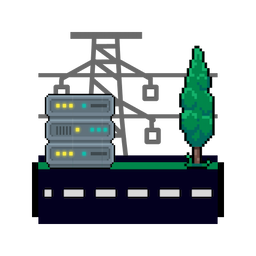


KleomedesValidator Profile: Public Good Projects. Infrastructure, Community, Tools and Others
Citizen Web3 Podcast | Approved by: 88% | |||
Citizen Web3 Youtube Channel | Approved by: 78% | |||
Citizen Web3 Blog | Approved by: 91% | |||